Family offices bought the assets. They left out the heirs.
As allocations surge, the $83.5 trillion transfer is running into a governance gap: heirs are not being brought into the decision room.

Goldman Sachs spent part of the week rolling out a private-markets platform for wealthy clients, complete with pre-IPO access and secondary trading. Campden Wealth spent the same week publishing a figure that should have made everyone pause: next-generation engagement in family offices remains low. The two announcements don't sit well together. Family offices have begun behaving like institutional LPs. They are pooling large sums for direct real estate, pushing into private equity, and giving the platforms that serve them billion-dollar valuations. The governance that would carry those assets to the next generation is still in first gear.
The latest Preqin figures show family-office commitments to private markets rose 524%, a pace wealth managers and endowments could not match. Ocorian found that 75% of family offices plan to take on more risk, with private equity leading the allocation gains. A few years ago the same families leaned on public equities and Treasuries. The shift into illiquid assets has happened in a handful of years, and the investment side has moved faster than the family's decision-making processes.
Built like an endowment
The industry is adding the infrastructure. Realm lets families with at least $200 million in investable assets pool enough money to buy real estate directly, bypassing the fund layer and its fees. That gives a family office the same negotiating position as an endowment. It also means the family owns a direct asset that will eventually have to be sold or held through a full business cycle. Goldman's new unit folds direct stakes and secondary trading together, giving clients an earlier exit than a traditional private fund and quietly acknowledging that the long lockup was a problem for wealthy clients in the first place.
CAIS, the alternatives network for registered investment advisers, has been part of that buildout. The company doubled its valuation to $2 billion. Vista Equity put in $170 million. That money came from a private-equity firm that wants to own the channel through which independent advisers reach private funds. More capital behind that channel means more pressure to push alternatives in front of RIAs, family offices, and the patriarchs and matriarchs who run them.
On the operator side, family offices are turning a 2011 SEC exemption that lets them stay unregistered into a compensation tool, paying key staff like private-equity principals. The families in charge are adopting institutional talent practices. That form of governance concerns employees, though, not heirs.
The missing next generation
Campden Wealth's latest report, covered by PWD this week, found that while more families are defining what their wealth is for, actual next-generation engagement remains low. A PWD close story put the consequence plainly: family offices are piling into private equity before finishing the succession work the asset class demands.
The sequence is off. A direct real estate stake can take a decade to realize. A private-equity fund is a ten-year lockup with no liquid market. The next generation is set to inherit positions they never voted on, in vehicles they cannot sell, with no agreed process for holding or exiting. The $83.5 trillion expected to pass between generations is increasingly made up of illiquid assets that demand active decisions. The heirs are not in the room, are not trained to understand an illiquidity premium, and may not know why the risk was taken.
The gap is not theoretical. Goldman's own survey finds family offices trimming private equity in the near term, with tax considerations keeping the positions sticky. The illiquid stakes will stay in the family even as the original allocator pulls back. Heirs will inherit a portfolio that the departing generation wants to exit. That is a serious governance mismatch.
Who keeps the job
The firms that hold the money will not necessarily be the ones with the best alternatives shelf. The ones that keep it will treat family governance as a product. They will teach families how to run an investment committee, how to bring a 25-year-old into the room meaningfully, and how to set policy on LP interests that outlasts the original allocator. Wealth managers who sell private-market access without that layer are building the next crisis: a generation of heirs who see a locked-up portfolio and think the fastest fix is firing the advisor.
Goldman, Realm, and CAIS are still building the access. Campden, Ocorian, and the succession stories keep repeating the warning. The only thing left to settle is which firms get to manage the assets, and whether the heirs let the original advisor keep the job.
Save this analysis and keep the funds you follow together in My Desk.
Sign in to save articles or follow funds.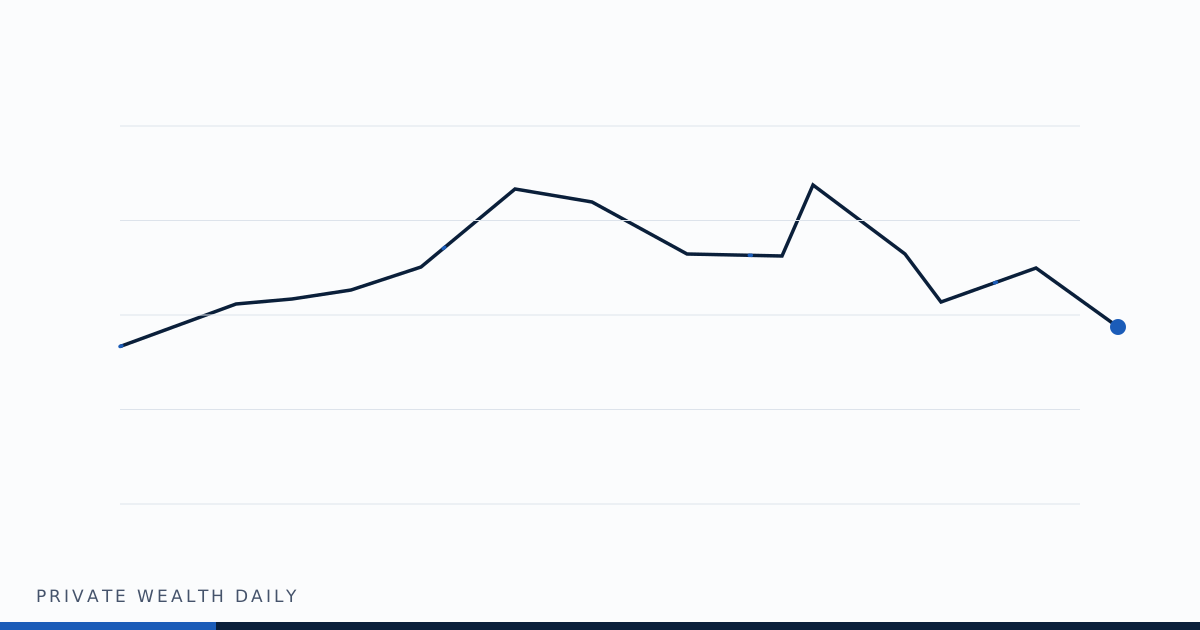 Data
DataOpenArc Corporate Advisory tops 30-day tally, ahead of UBS
 Data
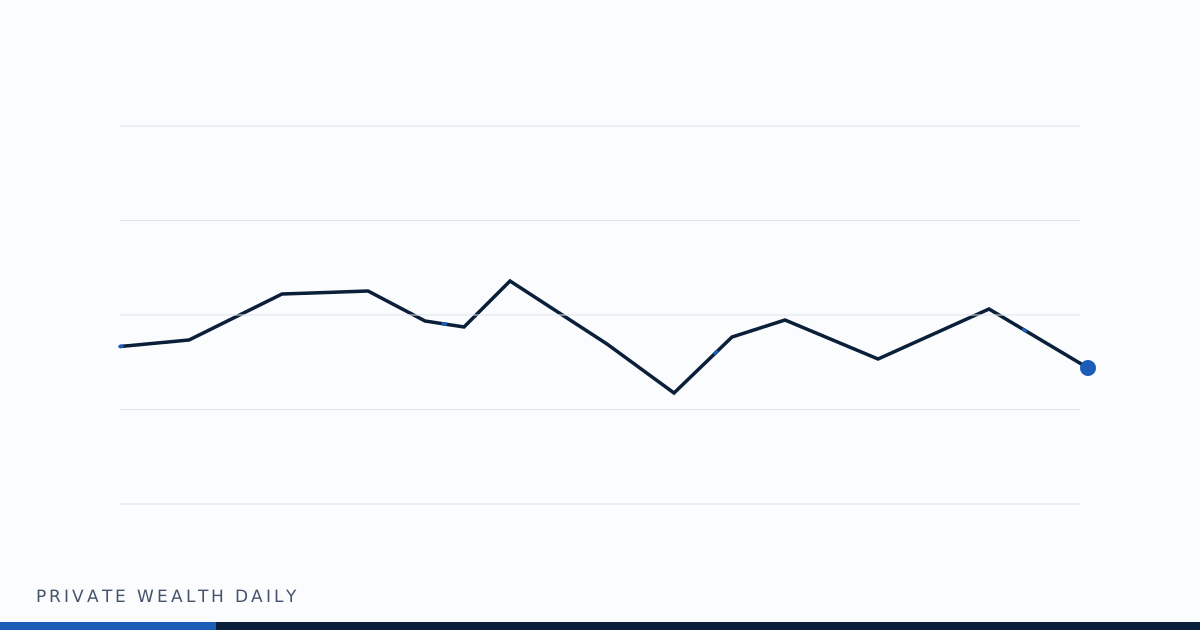
DataAdvisor moves hit 2,555 in 30 days, outpacing 336 fund launches
 Deals & PE