Concurrent to add Spire's $5.4B and 30-plus advisor teams in first platform purchase
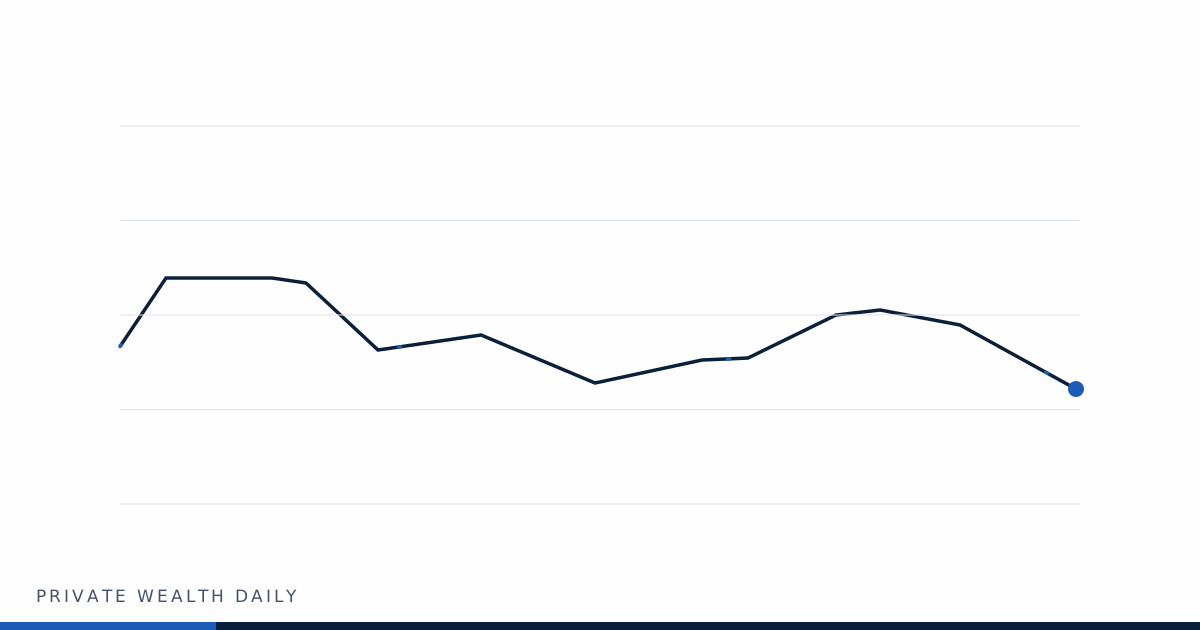
Concurrent reports $28.6 billion in AUM pro forma for the announced $5.4 billion Spire platform, up from $16.8 billion at the start of the year.
Concurrent Investment Advisors has agreed to acquire Spire Investment Partners, the McLean, Va., hybrid platform with $5.4 billion in assets and more than 30 advisor teams, marking the Tampa firm's first purchase of another RIA platform. Concurrent broke away from Raymond James in 2022 and has spent the years since adding practices to its 1099 independent-contractor platform, often in exchange for minority stakes, then opened a minority-investment program to outside RIA owners last year. Buying a competing platform outright is a different instrument in that kit. "We've got ambitious growth goals, and this is a new frontier for us," chief executive Nate Lenz said. "Rather than doing it brick-by-brick, we are going out to get a like-minded group of advisor teams."
The firm reports $28.6 billion in assets under management, up from $16.8 billion at the start of the year, plus $18 billion in corporate retirement plan assets under advisement. Because the report frames the Spire transaction as an agreement to acquire rather than a completed purchase, that $28.6 billion is best read pro forma, the total Concurrent would carry with Spire aboard. The coverage attaches no purchase price or multiple to the deal. If the reported total does include the platform, Spire would be a little under half of the $11.8 billion Concurrent's assets have grown this year, leaving roughly $6.4 billion to arrive the way the rest of the growth has: practice by practice, frequently with Concurrent taking a minority position in the firm that joins.
| Deal detail | As reported |
|---|---|
| Buyer | Concurrent Investment Advisors, Tampa, Fla. |
| Target | Spire Investment Partners, McLean, Va. |
| Spire assets | $5.4 billion |
| Spire advisor teams | More than 30 |
| Concurrent reported AUM | $28.6 billion, up from $16.8 billion at start of year |
| Retirement plan assets under advisement | $18 billion |
| Purchase price | Not stated in the coverage |
A price can be inferred where none is given. Spread across the 30-plus teams the platform gains, the acquisition works out to roughly $180 million a team, and because Spire counts more than 30, the true average sits below that. Per-team tags are a blunt measure, since the revenue mix, the recruiting pipeline and how much stays after closing all move the number, but on a platform-to-platform trade it is the only read the announcement offers. What is being bought at that rate is the capacity to keep teams independent: a 1099 model in which advisor teams retain their own brands and their own balance sheets while drawing on shared technology and home-office support. Lenz described the fit in the language of sameness. "Looking at Spire was kind of looking in a mirror," he said, calling the search one for "firms that line up with advisor independence and advisor support."
Same model, opposite directions
The two firms arrived at that structure from opposite ends. Concurrent assembled its platform practice by practice; Spire dates to 1997 and only in the past few years began adding other RIAs to its hybrid platform, which brought its total past 30 advisor teams, and it launched an in-house succession program for affiliated firms, according to the announcement. A succession program is one of the things that bears on whether affiliated firms stay where they are. David Blisk, Spire's founder and chief executive, said in a statement that the decision followed conversations with his advisors, who "wanted the technology and resources to keep driving their growth and relevance to their clients." Blisk and Spire's employees previously owned the firm, according to its most recent Form ADV, which makes this the sale of a business held by its founder and its staff.
The announcement also says that Blisk, Spire's employees and Spire's advisors will have access to Concurrent equity; the terms and timing of that access go unstated. Equity offered to the people a deal depends on reads as a retention device first, and on a 1099 platform the point is sharper, because the teams that constitute the acquired business keep their own brands and their own balance sheets. Whether the equity stands as consideration for the sale or as the buyer's standard plan extended to new colleagues, the coverage does not say, and for the advisors being asked to stay the effect is the same either way.
What the next platform purchase would settle
Lenz said the firm will look to do more of this. A firm that spent the years since 2022 buying minority stakes in other people's practices has now bought one platform whole, so what came with the deal is everything Spire had assembled on the other side of the table: the hybrid platform, the succession program, the support the home office provides. Those are the pieces Concurrent has built gradually on its own side, and acquiring them already assembled is a faster route to the same end. It is also the part of the transaction the coverage leaves unpriced — a gap that matters more here than in a practice acquisition, because what changes hands is the machinery that keeps teams rather than any one team's book.
Lenz has said Concurrent will seek more deals of this kind. The first one arrived with its price left out of the announcement, which makes the second one of these the place where a number would have to appear.
A firm that spent the years since 2022 buying minority stakes in other people's practices has now bought one platform whole.
Save this analysis and keep the funds you follow together in My Desk.
Sign in to save articles or follow funds. M&A
M&ACerity Partners absorbs Cornerstone Capital and Echo Wealth Management, adding $1.7 billion and a Minneapolis foothold
 M&A
M&AHB Wealth buys $700 million Austin RIA Wealth Care, its seventh market
 Features